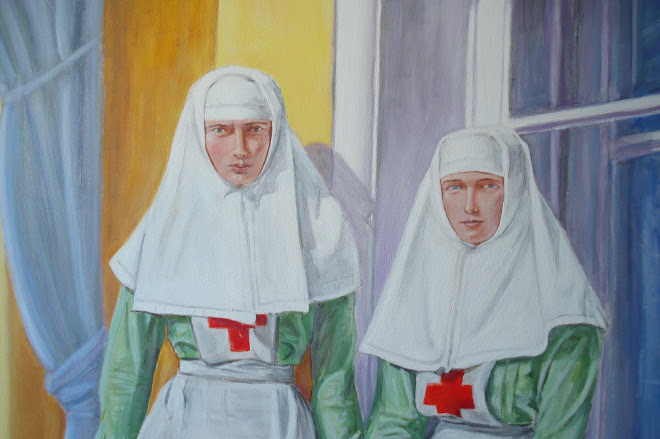
Tatiana and Olga 2010

Tatiana and Olga  2010

Friday, December 2, 2022

"My Heart is in Haworth" My Brontë stories


For the past ten years I have been writing a Brontë
 novel from the view point of Charlotte's husband, Arthur Bell Nicholls. Well, I thought I was writing a novel. What I now find is I have been writing many, many Brontë short stories that run from 1798 to 1906. The collection is called," My Heart is in Haworth. "

I have always meant to weave these stories into one narrative and have tried to do so for years. But so far they stubbornly refuse. So I'm now  publishing them as they were written, and posting them periodically on this blog. 

I have decided to do it this way because I'm tired waiting for this book too! The time is now on the platform I have. 

The stories are offered to the public for free,but they are copyrighted of course. ©

 Below is my first installment. "Miss Emily's stone" set in 1854.

 The book hasn't been written in chronological order by any means. In one writing session I could zip to two or three different decades of the story and often did. So it is in keeping with the endeavor that my writing doesn't appear in an orderly timeline either. 

There are far more romantic and dramatic scenes than this one to be sure. But this one elbowed itself to the front of the line!

 The scene is the fall of 1854, the Nicholls have returned to Haworth from their honeymoon in Ireland. 

 At this point it is important to say something about Arthur Bell Nicholl's appreciation for poetry so that part of my story doesn't seem fantastic. Arthur did not write poetry. But he was sensitive to it and utilized his fine voice to recited it for friends and family most of his life. 

We know this because Rev. George Sowden , the younger brother of Arthur's great friend, Sutcliffe Sowden, recalled Arthur did so a great deal and that.... 

" On one occasion, he repeated by heart, from the beginning to end , and without a single mistake or a moment's hesitation, Tennyson's long and exquisite poem "The May Queen" With the charming Irish pathos which he threw into it, it was delightful to hear." 

 And we know George wrote this because the dedicated research of Ian and Catherine Emerson and their discovery of his 1890s article published in a church magazine,which they republished. 


George's memoirs affirms my own view of Arthur; that Arthur Bell Nicholls was much more than it generally believed. As Charlotte said of Arthur, ( and I have her say it in the story) that he was "one who has to be known to be appreciated". Arthur's day book is also full of poems. Copied from popular newspapers it's true, but none the less heartfelt and meaningful to him. His stance, in my view, is that plain bread can be nourishing too; something Charlotte came to consider.

I am also posting a link to my You Tube channel where I uploaded a  video for the stories. I made it awhile ago and thought when it was made I would be publishing the whole novel at once. But what it says, that I plan to publish in 2022, still holds true for a group of stories beginning to appear in 2022. 


I've made such videos for author friends for years. It was fun to make one for myself! The music is from the 1955 film " A Man called Peter" by the great Alfred Newman.

 And now,“ Miss Emily's Stone”


Miss Emily's Stone


By Anne Lloyd

Autumn 1854


On Charlotte's side of our chamber, along the window, resided her dressing table. I was allotted a dressing chair and half a wardrobe on the portion near the door; more than enough for my needs. 

Now that we had returned to Haworth, the “Bohemian arrangements" of putting up in inns and living from boxes was at an end. Charlotte’s dressing table had her things laid out just so. Orderly neatness ruled there as elsewhere naturally. I had by then become accustomed somewhat to the female toilet. There a brush, a comb, a small hand mirror, a trinket dish, a jar or two, a small vase for moor flowers, even a book given to Charlotte by Miss Wooler.

 But what seemed out of place, even in my limited experience, was a small, flat beck stone. I made sure my eyes were not deceiving me. I could not fathom why a rude stone was among her dainty things and even given a place of prominence. There had to be a reason. Nothing was there by chance. 

One day, when my Wife was nearly ready, I could not help but point to it and inquire.

 "What is this, Charlotte?" 

 "Why do you ask?"

 "Seems out of place.... among the rest," I said. When her surprise passed, for she was still not used to questions whilst at her dressing table, Charlotte's face gentled to a smile. She took up the stone and worried it as tenderly as an infidel would his beads. 

 "This is Emily's stone." She said, “I have it here by me for her sake."

 "Miss Emily's stone? How do you mean?" 

 She looked at me thoughtfully and decided to tell me. 

 "It has a story." Charlotte said. "Years ago, when we were young, in fact, it was during Ellen's first visit, we five were all sitting by the beck. Miss Nussey, my sisters, Branwell and I. Emily was playing with some minnows in a pool, as she liked to do, chasing them with her hand and allowing them to swim between her fingers and such. 

She suddenly sat up, turned to me and told me to extend my hand for a gift. I was slow to do so," Charlotte said.

 "Indeed? Why?"

 "On the way to the beck, while my eyes were trustfully shut, Emily led me up to a cow on the moor,” Charlotte said. "She knew they terrified me of course and while Ellen was visiting too! Emily ran off and left me alone with the huge creature. My screams rang through out the moor hills. Oh, I can join in her laughter now, but I was very cross with her then and did not want to obey her so soon again. 

However, at Emily’s second command, I did put out my hand. In it, Emily placed this stone you ask about. How happy I was it wasn't something repugnant! Emily gave me this stone and she said to me, 'Here Charlotte, out of my endless bounty, I give you this. Am I now forgiven for the cow?'

 "I looked closely at it. Even I could see immediately what it was. 'An old stone?' I said to her. Was she mocking me again? I made to fling it back into the beck from whence it came."

 "'Charlotte! No!' Emily cried out. Of course, I instantly obeyed her then. There was only one time when her hard command had no effect upon me. Even so, I was confused and still quarrelsome. 

 “An old stone." I repeated. “Why should I keep it?"

Emily snorted with exasperation as was her habit when annoyed. " She said to me, 'I hand you eons and still you complain. That beck stone is far nobler, and of far, far greater value than the flashing gems you write of endlessly, Sister. There is no comparison.'"

 "I looked quickly to see if Ellen heard this reference to our under world, where such things dwelled. But thankfully she was a ways off, speaking with Anne and Branwell. 

 "An old stone." I grumbled again. “Are not cut diamonds eons years old too? "

'Yes, but affected surely,' Emily answered with a sniff. 'By frail, fickle humanity. Shaped, not as God made them, like the moor and that stone. But to contours deemed comely today and unseemly tomorrow. And why? All to satisfy a passing, vane fancy. Hardly worth even noticing.'

 Emily was amused by the thought and its folly. But then she grew serious. "'Sister! Don’t you see? This stone was shaped by God's hand alone! From time immemorial, completely by His will! Think of it! It has known no other influence but His. Does that not excite and thrill you? Does that not immeasurably trump your so-called costly gems?'" 

 "An old stone" I repeated, for I did not like to agree so readily. I slipped it into my pocket and afterwards could never quite return it to Nature as I meant to. Later how glad I was I did keep it! Mostly for her sake, of course, but Arthur! Also, too because Emily was right! Among the countless beck stones, shaped by untold eons by God, Himself, from the beginning of the world, this one stone was chosen by Emily for me! This priceless gift is now in my hand and will forever be on my dressing table. It indeed is far more precious to me than any gem could be."

 Charlotte opened her hand to ponder her treasure anew.

 “It’s like one of her poems to me, Husband. It elevates one. Emily elevated an old stone as I called it, to eons, to endless wonder, to Providence Itself. And it's all true. Not fancy. That is poetry and also why it resides on my dressing table."

 Charlotte had seen an opportunity for instruction and took it. Did I now see something of her notions of poetry expressed during our moor meetings? I had stubbornly stood with those who purposely recite poetry, as I have since a boy, reciting verse for family and friends. That was my calling in that line. There was a  brief back-and-forth tussle until Charlotte said with some crispness, there would be nothing for anyone to recite without the poets. I could not refute that. However, it pleased me she had to resort to a practical point to win the day. This further understanding of the topic was new, yet dawning. 

 "Finding the wonder in what is believed to be commonplace?" I ventured. "The wonderful aspects that were there all along and true."

 "Nothing is truer than poetry Husband."

 I looked at her prized relic with new respect.

 "It is more than just a stone then, isn't it?" 

 Charlotte was pleased. She placed the stone in my hand and clasped my fingers around it.

  “It also reminds me of you, Arthur.’ Charlotte said. “The stone rejected by the builders that becomes the keystone. You must be known to be duly appreciated."

 "Psalm 118," I said.

 "You know your Bible better than I believed a Tractarian would.”

 "I have had occasion to ponder that Psalm's meaning."

 Charlotte chuckled.

 The stone now resides on my desk.


 ©Anne Lloyd 2022

Tuesday, February 1, 2022

A letter for Arthur


A Brontë Video


This is a YouTube video about letter I imagined Charlotte Brontë Nicholls composed for her husband, Arthur Bell Nicholls at the time she signed her Will in February of 1855.
I have her write it in case her illness in proved mortal, which,of course, it did.

It is made up as part of the Brontë novel I'm currently writing, but it is based on the tenor of Charlotte's last letters from her death bed. Letters where she praises Arthur to one and all as " the best husband a woman ever had" , and she declares that " My heart " is Knit to Him". Also Charlotte 's last words spoke of their happiness.

Usually I keep a tight lid on what I'm writing as it's likely best to present it as one piece, whole cloth. But this letter insisted on a public platform now and so I made this video.

Its message is somewhat the core of the novel;

"Where there is love, there can be no separation. "

What is illustrated here is Charlotte 's ability to see though the veil of time and death, which the seriously ill often do. They move back and forth from one dimension to another far more easily than the we, the healthy can.

In her altered state, Charlotte experiences time differently and the sense of separation that death brings is not as strong in her vision as it was of course, for her husband who will be left behind.

Charlotte sees" the bigger picture" as it were. She sees the continuance of love and she wants to assure Arthur that one day he too will fully know ; that death cannot separate them. That because of their love, they already exist in Eternity together . Charlotte was extremely happy in her marriage." My Dear Boy " is a real endearment she used for Arthur. That's not lightly earned or given.

The gate I have her speak about in this letter is a reference to an event in May of 1853. Arthur was leaving the Parsonage for, what he thought, was the last time. He stopped at the back gate and could not go forward. Charlotte opened the door too see what was happening, and heard him ," sob as women never do" and she went to him. In the letter I composed, I have her say to her husband she will wait until his own passing and at that time Arthur will come to her at the "gate" between life and death. Then they will go though it together.

In the book Charlotte's illness is due to the same disease that carried off the Brontë's beloved servant, Tabby. She died just before Charlotte. Charlotte was caring for Tabby during her last illness and I believe in that way Charlotte caught the disease herself. Her last letter in ink was to a doctor about Tabby’s symptoms. The coming child is a separate issue for them. That's my take on it. Some people don't believe Charlotte was expecting. Charlotte and Arthur thought she was ,and so in the book, she is. It was a great concern for them of course, which in the letter she alludes to..... but in their mind, the child was months away ; then this illness comes about well before the time the baby is due. Arthur Bell Nicholls was no artistic genius like his beloved wife. But he was an "emotional genius" as it were, capable of a shattering "grand passion" in his deep, life long love for Charlotte Brontë.

Indeed, outside of her family, Charlotte never met a more feeling person as Arthur Bell Nicholls. Here is what she said "I never saw a battle more sternly fought with the feelings than Mr. N. fights with his, and when he yields momentarily, you are almost sickened by the sense of the strain upon him. " It's high praise when your power of feeling can so deeply impress a Brontë! Many times Charlotte said she would stand with feeling and kindness over reason, or high gifts. In the former attributes Arthur was richly endowed. So it's not surprising to me they married and were happy. Yet they had so little time, a scant 8 months. In this imagined letter, Charlotte is telling Arthur they don't need much time on earth. They already have Eternity. It's interesting because the music is from "The Bridges of Madison County" Those lovers had but 4 days! But again, much physical time is not always needed to have something forever. It just has to be. It doesn't have to be long. A timely message.
Music: "The Bridges of Madison County" by Lennie Niehaus

Okay! Back to work!


SHOW LESS

Tuesday, October 12, 2021

It Happened at Sotheby''s

Holding Emily's poems

In June of this year, my husband and I traveled to New York to see a manuscript of Emily Brontë 's poems on display at  the Auction house, Southby's. This manuscript is part of the Honresfield Library collection,  a legendary treasure trove, not seen for almost 100 years.  

Now it was to be put up for auction. But first part of it would be on display. I was alerted to this event by my friend, Geri Meftah front the " "The Bronte Sisters" . She kindly allowed me to post  there about my adventure shortly thereafter. 

Thank you, Geri! 

Here is a link to that post

It Happened At Sotheby''s

What I don't say in that post was when I was granted permission to hold Emily's poems, I squealed like a 5 year old.

 " REALLY?! "

oh yeah, I was pumped.

And I'm still stunned. It was much later I realized we were there just as one of the world's biggest book buyers and sellers happen to be there too . I got in on his appointment as it were,  because he and we were chatting with the curator,  who came out of her office expressly to show him the items . It was timing from the Gods.

Even in my state of shock, from seeing the case suddenly being opened and the  items passed about , I knew if I allowed those poems to float by me , on their way back to the case ,without speaking up, I would always regret it.

 This compelled me to ask if I may hold Emily's poems too?  

The pages  Emily wrote upon,  which Charlotte found, held and read  with growing excitement, the beginning of their publishing life...Wow.  Words fail one. I'm glad there are photos.  

Shortly after our trip , the items of the Honresfield Library were pulled off the market, sent back to England, and an attempt is being made to have the UK buy it for the nation. It's a dazzling archive. I wish them success!

Close up


Brontë Novel Update


My Brontë  novel  goes on and I continue to greatly enjoy it. However it's also rather " lowering " as CB would say , to think Tolstoy took a mere 6 years for " War and Peace" and this Dec will be 9 years  for my novel !

But  he was a genius and Mrs Tolstoy make the fair copies nightly as he wrote. I tried dictating to my husband as he typed , as a means of getting typing done faster. But he's a writer too and invariably he would put other words in place of what I said lol! It didn't work out. But I greatly appreciated the offer and effort. 

Thanks, Hon!

My method of writing has been  to write the novel in long hand using  note books and then type it  into the computer as best as I can. A few years ago I had one laundry basket of note books. Currently I have five...Hmmmm. 

So now the focus is to work with what has been typed, and it's a good deal  Shape the typed text, rather than keep filling note books and slog on with one finger typing. The note books are galloping ahead!

Still the ponderings and ideas flow in. I've long said CB's decision, when she thought over marriage to Arthur Bell Nicholls, ( among many things) was a choice  between  Haworth or London. She choose Haworth. But it was more than that. Arthur was firmly placed in the clannish, Anglo-Irish socity. When Charlotte married him, she would be deemed Irish and no mistake.

When Charlotte  marries Arthur , she intends ABN to have the living after Papa ( in my mind ) and if she had lived, it's likely he would have. So they were not going to live in Ireland. But it wouldn't matter if they were in Haworth or Timbuktu, as Mrs Nicholls, she would be deemed ; Irish. 

It would not be looked over as it may have been as a single woman whose mother was from Cornwall . I believe this aspect added to her relief when on her Honeymoon, Charlotte found she liked her new relations. Because they were indeed her new relations .

This adds another wrinkle as to why Papa was furious over the idea of CB marrying Arthur Bell Nicholls, Haworth's Irish curate.  It wasn't just Arthur's poverty. It was also that Patrick had spent 50 years improving ( in his eyes ) on the family's social status, his son is dead ( so no advance there ) ,  however Charlotte  had  an amazing, world wide success. The English Quality compete for her company ... Yet she puts all that aside to marry a penniless, Irish curate. Thus placing Brontë  family at square one after a half century of  labor and success in England.

Well not quite. Arthur's social position in Ireland was higher that the Brontë's and certainly far higher than Pat Pundy's when he came to England long before. However this was not a consolation to Patrick!

But it  was not simply this that caused trouble. Patrick and Arthur were far apart religiously . Patrick had left his first love over religion. To him it mattered and I have it as why he could not give CB away to a High church Tractarian in the House of God,  the Church, Patrick  had  served for 40 years.

Patrick thinks on the Evangelical ministers who helped him as a youth and all he owes them. They put him where he was and  when being asked,  " Who giveth this woman?" as he would be, Patrick cannot imagine uttering the words " I do ", when the groom he's giving his daughter to is a Tractarian, those long ago minister's religious rival. Patrick will greet the married couple gladly afterwards . I have Arthur understand and besides he says:

 " The Brontë I wanted was there."  

People don't often recall that just at the time when Arthur proposed to Charlotte,  Ellen Nussey was thinking over if she would become the ill paid companion of  an elderly clergyman 's wife; hardly a thrilling prospect. Indeed when CB writes to Ellen about Arthur's proposal in December of '52, she first talks about that very different proposal Ellen was considering. Yikes.

Ellen was fine with it all and listened to every word as a good friend would, up to the time Arthur left Haworth, having been refused. It was later when she learned that after he left, Arthur had written letters to Charlotte and worse, she had answered him and indeed far worse than all that; there were meetings! Ellen knew it was serious if CB had gone that far.  Then Ellen, like ,Papa, flew into a rage. The row was such, the friendship was ruptured for months afterward.

While they had different reasons, Papa and Ellen locked shoulder to shoulder and proceeded to do all they could to stop this alliance.  All they could do was to counter the idea with deeply hurt feelings. A potent force indeed. It was a long battle, but ultimately they were no match for Charlotte once she made up her mind. It's not even close, lol

So over the furious objections from her best friend and her father, Charlotte Brontë  had to fight tooth and nail for her marriage. She did so. It's quite a story.


Romanov videos

I've been dropping Romanov videos since posting, here are some links


The Romanovs. Tatiana 


The Romanovs. OTMA up close.


The Romanoves. I cannot spare you.


The Romanovs. The Big Pair up close


I love this photo of Alix and Anastasia from May of 1916. A glimpse  of what might have been. Anastasia looks quite grown up there. And while it is often said Alix adored her husband and her son, one can see she adored her daughters as well.


Empress Alexandra and Anastasia 
May 1916


 I'm hoping to start painting Romanovs again. I've plenty of ideas, it's been over 6 years!


 Okay! Back to work!

Monday, November 9, 2020

It was the worst of times ,it was the best of times

It was the worst of times,it was the best of times.
 
 It's been a difficult time for everyone. We have all had challenges during these past months and very many have had tragedies.
 
 During this time it's has been my portion ( as CB would say)  along with the challenges, to be having one of the best of times, in writing and typing my Brontë novel. I love every minute of it. I'm lost in the Brontë world and I am so blessed to have this in my life. My brain and heart teem with so much to tell of the Charlotte Brontë and Arthur Bell Nicholls story, that I hope I can bring it all forth....scene after scene tumble into my head. Now comes the typing, and still more comes though. 
 

Here is a photo of the book's notebook bins. Each bin contain three layers of composition books filled with writing for my novel. Since taking this photo, I found another bin I had forgotten about and created 5 more note books!There is so much to tell of this story, at times it is overwhelming how much material I must pull together. But it is not so when I type, so I type with my one finger as much as I can!
 
It maybe a wonder that I could be writing the same book these eight years. But I have not been writing the same book, I've written a good number of books! Because this book is ever changing into something else. The writing that began in 2012, bares little resemblance to today's writing and the book has now so expanded in its scope, and depth, I've given up predicting when it will be finished.
 
 There is so much to say and it must have its say. 
 
Just as an example, one of dozens; when Arthur purposed to Charlotte in Dec of 1852, Charlotte asked him if he" had spoken to Papa? "Arthur said he " dared not." This has usually been viewed as simply a failure of courage on Arthur's part. But nothing could be further from the truth. It was out of Arthur's concern for Rev. Brontë and of course, Charlotte. 
 
 People forget Rev. Brontë had a serious apoplectic attack just a few months before in the summer and had barely recovered. They also forget the on going failure of Patrick Brontë's quest for clean water for the village had, by this time, taken a great toll. Rev. Brontë had fought for it for years and after the victory of the Bandage report in 1850, Patrick believed his wish for clean water would finally be effected. 
 
However it faced rebuff after rebuff and at the time of Arthur's proposal, the initiative seemed in ruins. Consequently of at least these two reasons, in Dec of 1852 , Rev. Brontë health was in a defalcate state. 
 
 But it was not just a matter of Patrick's heath. Arthur also knew his Pastor's strong feelings about Charlotte marrying at all and well knew the explosion that would follow, if his own, penniless curate made an attempt in that direction. In my mind Arthur "dared not" speak to Patrick because he feared his Pastor would become so enraged, he would expire at Arthur's feet if he had dared to speak to Patrick directly.
 
We know Arthur was absolutely correct in his misgiving because Papa indeed had a dangerous fit ( "not to be trifled with" as CB said ) when Charlotte told him and even though she immediately assured Papa she would refuse. 
 
To simply call Patrick's feelings at that time " anger", does not described their true nature. They were at the boiling point of eruption for months afterwards. Charlotte finally had to ban the topic from the tea table and letters because the effect it would have on Patrick's heath. ( and her own!)
 
 That is one of many, many cases where I take the known history" He said he dared not" and flesh it out with the history that surrounds it and then communicate all that in a few lines in a novel!

So as I say, I have no idea when it will be done, but I'm always working on it.


My working set of CB's letters, a treasure trove. Note the numerous bookmarks 


 Charlotte Brontë and Thackeray

Charlotte Brontë thought Thackeray was the greatest author of her time. She heaped praise upon the man, indulging in her " abiding sin of enthusiasm". Yet when they met in life, it was an disquieting, even painful experience for both of them. 

 It seems when Charlotte read W. M. Thackeray's works, she felt he was like minded person, supremely skilled in lampooning society in all its folly. In her mind, they sat comfortably together in the governess corner of a fashionable drawing room,exchanging cutting, but fitting, observations about the revelers before them. 

However when Charlotte met Thackeray, the man, she found her friend had deserted the side lines and was fully enjoying every frivolous aspect of society he lampooned in print. Charlotte believed they had condemned all that together. Thackeray indeed condemned society, but he also loved it to the hilt as well. This was a shock for Brontë.

 When like mined people have different coping techniques, relations can difficult. I'm impressed how much Thackeray liked Charlotte even after being lectured by the little provincial patch! And he kept trying to please her! One does not feel such efforts was usual for him. 

But ultimately Thackeray feared the rage from love privation that  he found in Charlotte's work and herself, too much for comfort. They were poles part in their everyday lives and would not draw well together

 However when Charlotte married, and Thackeray knew a  "Tomkin" husband had somehow arrived, he sent Charlotte a wedding gift of a wonderful copy of “Aesop’s Fables,” that proved he understood Charlotte better than she had perhaps realized. 

It was beautifully made ,a classic, in French and had wonderful print illustrations. Everything that would please her in such a gift. Charlotte showed it to others , such as the Sowden brothers, with great pride. The book was proof of Thackeray’s ultimate understanding and appreciation .

  I have two new Romanov videos

 The Romanovs, Their smiles

 The Romanovs. Young OTMAA 2


Okay, back to work and take care!


                                                                        Anastasia


Monday, August 10, 2020

CHARLOTTE BRONTÉ' AND BRUSSELS


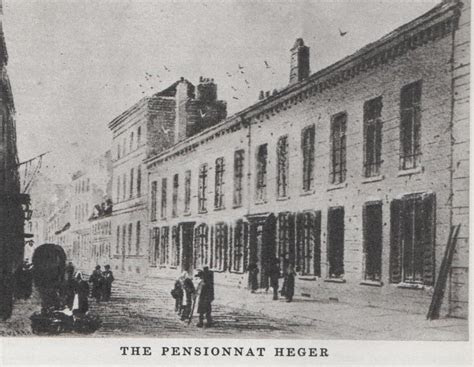
I found an interesting article describing a couple's visit to The Pensionnat Heger from the 1880's. What struck me was the kindness of the Heger family towards the endless visitors seeking the scenes of what was for them, a painful episode. I'm continuing to work on my Bronte novel and plan to post an update soon. Make art and stay safe!


  SCENES OF CHARLOTTE  BRONTÉ'S LIFE IN BRUSSELS


LIPPINCOTT'S MAGAZINE
DECEMBER, 1885


By Theo. Wolfe.


We had "done" Brussels after the approved fashion,—had faithfully visited the churches, palaces, museums, theatres, galleries, monuments, and boulevards, had duly admired the beautiful windows and the exquisite wood-carvings of the grand old cathedral of St. Gudule, the tower and tapestry and frescos and façade of the magnificent Hôtel-de-Ville, the stately halls and the gilded dome of the immense new Courts of Justice, and the consummate beauty of the Bourse, had diligently sought out the naïve boy-fountain, and had made the usual excursion to Waterloo.

This delightful task being conscientiously discharged, we proposed to devote our last day in the beautiful Belgian capital to the accomplishment of one of the cherished projects of our lives,—the searching out of the localities associated with Charlotte Bronté's unhappy school-life here, which she has so graphically portrayed. 

For our purpose no guide was available, or needful, for the topography and local coloring of "Villette" and "The Professor" are as vivid and unmistakable as in the best work of Dickens himself. Proceeding from St. Gudule, by the little street at the back of the cathedral, to the Rue Royale, and a short distance along that grand thoroughfare, we reached the park and a locality familiar to Miss Bronté's readers. 

Seated in this lovely pleasure-ground, the gift of the empress Maria Theresa, with its cool shade all about us, we noted the long avenues and the paths winding amid stalwart trees and verdant shrubbery, the dark foliage ineffectually veiling the gleaming statuary and the sheen of bright fountains, "the stone basin with its clear depth, the thick-planted trees which framed this tremulous and rippled mirror," the groups of happy people filling the seats in secluded nooks or loitering in the cool mazes and listening to the music,—we noted all this, and felt that Miss Bronté had revealed it to us long ago. It was across this park that Lucy Snowe was piloted from the bureau of the diligence by the chivalrous stranger, Dr. John, on the night when she, despoiled, helpless, and solitary, arrived in Brussels.

She found the park deserted and dark, the paths miry, the water "dripping from its trees." "In the double gloom of tree and fog she could not see her guide, and could only follow his tread" in the darkness. We recalled another scene under these same tail trees, on a night when the iron gateway was "spanned by a naming arch of massed stars." The park was a "forest with sparks of purple and ruby and golden fire gemming the foliage," and Lucy, driven from her couch by mental torture, wandered unrecognized amid the gay throng at the midnight concert of the Festival of the Martyrs and looked upon her lover, her friends the Brettons, and the secret junta of her enemies, Madame Beck, Madame Walravens, and Père Silas.

The sense of familiarity with the vicinage grew as we observed our surroundings. Facing us, at the extremity of the park, was the unpretentious palace of the king, in the small square across the Rue Royale at our right was the statue of General Béliard, and we knew that just behind it we should find the Rue Fossette and Charlotte Bronté's pensionnat, for Crimsworth, "The Professor," standing by the statue, had "looked down a great staircase" to the door-way of the school, and poor Lucy, on that forlorn first night in "Villette," to avoid the insolence of a pair of ruffians, had hastened down a flight of steps from the Rue Royale, and had come, not to the inn she sought, but to the pensionnat of Madame Beck.

From the statue we descended, by a quadruple series of wide stone stairs, into a narrow street, old-fashioned and clean, quiet and secluded in the very heart of the great city,—the Rue d'Isabelle,—and just opposite the foot of the steps we came to the wide door of a spacious, quadrangular, stuccoed old mansion, with a bit of foliage showing over a high wall at one side. A bright plate embellishes the door and bears the inscription,

PENSIONNAT DE DEMOISELLES. Héger-parent.

A Latin inscription in the wall of the house shows it to have been given to the Guild of Royal Archers by the Infanta Isabelle early in the seventeenth century. Long before that the garden had been the orchard and herbary of a convent and the Hospital for the Poor.

We were detained at the door long enough to remember Lucy standing there, trembling and anxious, awaiting admission, and then we too were "let in by a bonne in a smart cap,"—apparently a fit successor to the Rosine of forty years ago,—and entered the corridor. This is paved with blocks of black and white marble and has painted walls. It extends through the entire depth of the house, and at its farther extremity an open door afforded us a glimpse of the garden.

We were ushered into the little salon at the left of the passage,—the one often mentioned in "Villette,"—and here we made known our wish to see the garden and class-rooms, and met with a prompt refusal from the neat portresse. We tried diplomacy (also lucre) with her, without avail: it was the grandes vacances, the ladies were out, M. Héger was engaged, we could not be gratified,—unless, indeed, we were patrons of the school. 

At this juncture a portly, ruddy-faced lady of middle age and most courteous of speech and manner appeared, and, addressing us in faultless English, introduced herself as Mademoiselle Héger, co-directress of the pensionnat, and "wholly at our service.

" In response to our apologies for the intrusion and explanations of the desire which had prompted it, we received complaisant assurances of welcome; yet the manner of our kind entertainer indicated that she did not appreciate, much less share in, our admiration and enthusiasm for Charlotte Bronté and her books. In the subsequent conversation it appeared that Mademoiselle and her family hold decided opinions upon the subject,—something more than mere lack of admiration.

 She was familiar with the novels, and thought that, while they exhibit a talent certainly not above mediocrity, they reflect the injustice, the untruthfulness, and the ingratitude of their creator. 

We were obliged to confess to ourselves that the family have apparent reason for this view, when we reflected that in the books Miss Bronté has assailed their religion and disparaged the school and the character of the teachers and pupils, has depicted Madame Héger in the odious duad of Madame Beck and Mademoiselle Reuter, has represented M. Héger as the scheming and deceitful M. Pelet and the preposterous M. Paul, Lucy Snowe's lover, that this lover was the husband of Madame Héger, and father of the family of children to whom Lucy was at first bonne d'enfants, and that possibly the daughter she has described as the thieving, vicious Désirée—"that tadpole, Désirée Beck"—was this very lady now so politely entertaining us.

 To all this add the significant fact that "Villette" is an autobiographical novel, which "records the most vivid passages in Miss Bronté's own sad heart's history," not a few of the incidents being "literal transcripts" from the darkest chapter of her own life, and the light which the consideration of this fact throws upon her relations with members of the family will help us to apprehend the stand-point from which the Hégers judge Miss Bronté and her work, and to excuse, if not to justify, a natural resentment against one who has presented them in a decidedly bad light.

How bad we began to realize when, during the ensuing chat, we called to mind just what she had written of them. As Madame Beck, Madame Héger had been represented as lying, deceitful, and shameless, as heartless and unscrupulous, as "watching and spying everywhere, peeping through every keyhole, listening behind every door," as duplicating Lucy's keys and secretly searching her bureau, as meanly abstracting her letters and reading them to others, as immodestly laying herself out to entrap the man to whom she had given her love unsought. In letters to her friend Ellen, Miss Bronté complains that "Madame Héger never came near her" in her loneliness and illness.

It was, obviously, some accession to the existing animosity between herself and Madame Héger which precipitated Miss Bronté's final departure from the pensionnat. Mrs. Gaskell ascribes their mutual dislike to Charlotte's free expression of her aversion to the Catholic Church, of which Madame Héger was a devotee, and hence "wounded in her most cherished opinions;" but a later writer, in the "Westminster Review," plainly intimates that Miss Bronté hated the woman who sat for Madame Beck because marriage had given to her the man whom Miss Bronté loved, and that "Madame Beck had need to be a detective in her own house." 

The recent death of Madame Héger has rendered the family, who hold her now only as a sacred memory, more keenly sensitive than ever to anything which would seem by implication to disparage her.

For himself it would appear that M. Héger has less cause for resentment, for, although in "Villette" he (or his double) is pictured as "a waspish little despot," as fiery and unreasonable, as "detestably ugly" in his anger, closely resembling "a black and sallow tiger," as having an "overmastering love of authority and public display," as basely playing the spy and reading purloined letters, and in the Bronté epistles Charlotte declares he is choleric and irritable, compels her to make her French translations without a dictionary or grammar, and then has "his eyes almost plucked out of his head" by the occasional English word she is obliged to introduce, etc., yet all this is partially atoned for by the warm praise she subsequently accords him for his goodness to her and his "disinterested friendship," by the poignant regret she expresses at parting with him,—perhaps wholly expiated by the high compliment she pays him of making her heroine, Lucy, fall in love with him, or the higher compliment it is suspected she paid him of falling in love with him herself.

 One who reads the strange history of passion in "Villette," in conjunction with her letters, "will know more of the truth of her stay in Brussels than if a dozen biographers had undertaken to tell the whole tale."

Still, M. Héger can scarcely be pleased by the ludicrous figure he is so often made to cut in the novels by having members of his school set forth as stupid, animal, and inferior, "their principles rotten to the core, steeped in systematic sensuality," by having his religion styled "besotted papistry, a piece of childish humbug," and the like.

Something of the displeasure of the family was revealed in the course of our conversation with Mademoiselle Héger, but the specific causes were but cursorily touched upon. She could have no personal recollection of the Brontés; her knowledge of them is derived from her parents and the teachers,—presumably the "repulsive old maids" of Charlotte's letters. One of the present teachers in the pensionnat had been a classmate of Charlotte's here. 

The Brontés had not been popular with the school. Their "heretical" religion had something to do with this; but their manifest avoidance of the other pupils during hours of recreation, Mademoiselle thought, had been a more potent cause,—Emily, in particular, not speaking with her school-mates or teachers except when obliged to do so. The other pupils thought them of outlandish accent and manners and ridiculously old to be at school at all,—being twenty-four and twenty-six, and seeming even older. 

Their sombre and grotesquely-ugly costumes were fruitful causes of mirth to the gay young Belgian misses. The Brontés were not especially brilliant students, and none of their companions had ever suspected that they were geniuses. 

Of the two, Emily was considered to be, in most respects, the more talented, but she was obstinate and opinionated. Some of the pupils had been inclined to resist having Charlotte placed over them as teacher, and may have been mutinous. After her return from Haworth she taught English to M. Héger and his brother-in-law. M. Héger gave the sisters private lessons in French without charge, and for some time preserved their compositions, which Mrs. Gaskell copied. 

Mrs. Gaskell visited the pensionnat in quest of material for her biography of Charlotte, and received all the aid M. Héger could afford: the information thus obtained has, for the most part, we were told, been fairly used. Miss Bronté's letters from Brussels, so freely quoted in Mrs. Gaskell's "Life," were addressed to Miss Ellen Nussy, a familiar friend of Charlotte's, whose signature we saw in the register at Haworth Church as witness to Miss Bronté's marriage. The Hégers had no suspicion that she had been so unhappy with them as these letters indicate, and she had assigned a totally different reason for her sudden return to England.

 She had been introduced to Madame Héger by Mrs. Jenkins, wife of the then chaplain of the British Embassy at the Court of Belgium; she had frequently visited that lady and other friends in Brussels,—among them Mary and Martha Taylor and their relatives, and the family of a Dr. —— (not Dr. John),—and therefore her life here need not have been so lonely and desolate as it has been made to appear.

The Hégers usually have a few English pupils in the school, but have never had an American.

Some American tourists had before called to look at the garden, but the family are not pleased by the notoriety with which Miss Bronté has invested it. However, Mademoiselle Héger kindly offered to conduct us over any portion of the establishment we might care to see, and led the way along the corridor, past the class-rooms and the réfectoire on the right, to the narrow, high-walled garden. We found it smaller than in the time when Miss Bronté loitered here in weariness and solitude.?

 Mademoiselle Héger explained that, while the width remains the same, the erection of class-rooms for the day-pupils has diminished the length by some yards. Tall houses surround and shut it in on either side, making it close and sombre, and the noises of the great city all about it penetrate here only as a far-away murmur. There is a plat of verdant turf in the centre, bordered by scant flowers and damp gravelled walks, along which shrubs of evergreen and laurel are irregularly disposed. 

A few seats are placed here and there within the shade, where, as in Miss Bronté's time, the externals eat the luncheon brought with them to the school; and overlooking it all stand the great old pear-trees, whose gnarled and deformed trunks are relics of the time of the hospital and convent. 

Beyond these and along the gray wall which bounds the farther side of the enclosure is the sheltered walk which was Miss Bronté's favorite retreat,—the "allée défendue" of her novels. It is screened by shrubs and perfumed by flowers, and, being secure from the intrusion of pupils, we could well believe that Charlotte and her heroine found here restful seclusion. The coolness and quiet and—more than all—the throng of vivid associations which fill the place tempted us to linger. 

The garden is not a spacious nor even a pretty one, and yet it seemed to us singularly pleasing and familiar,—as if we were revisiting it after an absence. Seated upon a rustic bench close at hand, possibly the very one which Lucy Snowe had cleansed and "reclaimed from fungi and mould," how the memories came surging up into our minds! How often in the summer twilight poor Charlotte had lingered here in restful solitude after the day's burdens and trials with "stupid and impertinent" pupils! 

How often, with weary feet and a dreary heart, she had paced this secluded walk and thought, with longing almost insupportable, of the dear ones in far-away Haworth parsonage! In this sheltered corner her other self—Lucy Snowe—sat and listened to the distant chimes and thought forbidden thoughts and cherished impossible hopes. Here she met and talked with Dr. John. Deep beneath this "Methuselah of a pear-tree," the one nearest the end of the alley, lies the imprisoned dust of the poor young nun who was buried alive ages ago for some sin against her vow, and whose perambulating ghost so disquieted poor Lucy. 

At the root of this same tree one miserable night Lucy buried her precious letters, and "meant also to bury a grief" and her great affection for Dr. John. Here she had leant her brow against Methuselah's knotty trunk and uttered to herself those brave words of renunciation which must have wrung her heart: "Good-night, Dr. John; you are good, you are beautiful, but you are not mine. Good-night, and God bless you!"

 Here she held pleasant converse with M. Paul, and with him, spell-bound, saw the ghost of the nun descend from the leafy shadows overhead and, sweeping close past their wondering faces, disappear behind yonder screen of shrubbery into the darkness of the summer night. 

By that tall tree next the class-rooms the ghost was wont to ascend to meet its material sweetheart, Fanshawe, in the great garret beneath yonder skylight,—the garret where Lucy retired to read Dr. John's letter, and wherein M. Paul confined her to learn her part in the vaudeville for Madame Beck's fête-day. 

In this nook where we sat, Crimsworth, "The Professor," had walked and talked with and almost made love to Mademoiselle Reuter, and from yonder window overlooking the alley had seen that perfidious fair one in dalliance with his employer, M. Pelet, beneath these pear-trees. From that window M. Paul watched Lucy as she sat or walked in the allée défendue, dogged by Madame Beck; from the same window were thrown the love-letters which fell at Lucy's feet sitting here.

Leaves from the overhanging boughs were plucked for us as souvenirs of the place; then, reverently traversing once more the narrow alley so often traced in weariness by Charlotte Bronté, we turned away. From the garden we entered the long and spacious class-room of the first and second divisions. A movable partition divides it across the middle when the classes are in session; the floor is of bare boards cleanly scoured. There are long ranges of desks and benches upon either side, and a lane through the middle leads up to a raised platform at the end of the room, where the instructor's chair and desk are placed.

How quickly our fancy peopled the place! On these front seats sat the gay and indocile Belgian girls. There, "in the last row, in the quietest corner, sat Emily and Charlotte side by side, so absorbed in their studies as to be insensible to anything about them;" and at the same desk, "in the farthest seat of the farthest row," sat Mademoiselle Henri during Crimsworth's English lessons.

 Here Lucy's desk was rummaged by M. Paul and the tell-tale odor of cigars left behind. Here, after school-hours, Miss Bronté taught M. Héger English, he taught her French, and M. Paul taught Lucy arithmetic and (incidentally) love. This was the scene of their tête-à-têtes, of his earnest efforts to persuade her into his faith in the Church of Rome, of their ludicrous supper of biscuit and baked apples, and of his final violent outbreak with Madame Beck, when she literally thrust herself between him and his love. From this platform Crimsworth and Lucy Snowe and Charlotte Bronté herself had given instruction to pupils whose insubordination had first to be confronted and overcome.

 Here M. Paul and M. Héger gave lectures upon literature, and Paul delivered his spiteful tirade against the English on the morning of his fête-day. Upon this desk were heaped his bouquets that morning; from its smooth surface poor Lucy dislodged and fractured his cherished spectacles; and here, now, seated in Paul's chair, at Paul's desk, we saw and were presented to Paul Emanuel himself,—M. Héger.

It was something more than curiosity which made us alert to note the appearance and manner of this man, who has been so nearly associated with Miss Bronté in an intercourse which colored her whole subsequent life and determined her life work, who has been made the hero of her best novels and has even been deemed the hero of her own heart's romance; and yet we were curious to know "what manner of man it is" who has been so much as suspected of being honored with the love and preference of the dainty Charlotte Bronté. 

During a short conversation with him we had opportunity to observe that in person this "wise, good, and religious" man must, at the time Miss Bronté knew him, have more closely resembled M. Pelet of "The Professor" than any other of her pen-portraits: indeed, after the lapse of more than forty years that delineation still, for the most part, aptly applies to him. He is of middle age, of rather spare habit of body; his face is fair and the features pleasing and regular, the cheeks are thin and the mouth flexible, the eyes—somewhat sunken—are of mild blue and of singularly pleasant expression. 

We found him elderly, but not infirm; his finely-shaped head is now fringed with white hair, and partial baldness contributes an impressive reverence to his presence and tends to enhance the intellectual effect of his wide brow. In repose his countenance shows a hint of melancholy: as Miss Bronté has said, "his physiognomy is fine et spirituelle;" one would hardly imagine it could ever resemble the "visage of a black and sallow tiger." His voice is low and soft, his bow still "very polite, not theatrical, scarcely French," his manner suave and courteous, his dress scrupulously neat. He accosted us in the language Miss Bronté taught him forty years ago, and his accent and diction do honor to her instruction.

 He was, at this time, engaged with some patrons of the school, and, as his daughter had hinted that he was averse to speaking of Miss Bronté, we soon took leave of him and were shown through other parts of the school. The other class-rooms, used for less advanced pupils, are smaller. In one of them, the third, Miss Bronté had ruled as monitress after her return from Haworth.

 The large dormitory of the pensionnat was above the long class-room, and in the time of the Brontés most of the boarders—about twenty in number—slept here. Their cots were arranged along either side, and the position of those occupied by the Brontés was pointed out to us at the extreme end of the long room. It was here that Lucy suffered the horrors of hypochondria, so graphically portrayed in "Villette," and found the discarded costume of the spectral nun lying upon her bed, and here Miss Bronté passed those nights of "dreary, wakeful misery" which Mrs. Gaskell describes.

A long and rather narrow room in front of the class-rooms was shown us as the réfectoire, where the Brontés, with the other boarders, took their meals, presided over by M. and Madame Héger, and where, during the evenings, the lessons for the ensuing days were prepared. Here were held the evening prayers, which Charlotte used to avoid by escaping into the garden. This, too, was the scene of M. Paul's   readings to teachers and pupils, and of some of his spasms of petulance, which readers of "Villette" will remember. From the réfectoire we passed again into the corridor, where we made our adieus to our affable conductress. 

She gave us her card, and explained that, whereas this establishment had formerly been both a pensionnat and an externat, having about seventy day-pupils and twenty boarders when Miss Bronté was here, it is now, since the death of Madame Héger, used as a day-school only,—the pensionnat being at some little distance, in the Avenue Louise, where Mademoiselle is a co-directress.

The genuine local color Miss Bronté gives in "Villette" enabled us to be sure that we had found the sombre old church where Lucy, arrested in passing by the sound of the bells, knelt upon the stone pavement, passing thence into the confessional of Père Silas.

 Certain it is that this old church lies upon the route she would naturally take in the walk from the Rue d'Isabelle to the Protestant cemetery, which she had set out to do that dark afternoon, and the narrow streets of picturesque old houses which lie beyond the church correspond to those in which she was lost. Certain, too, it is said to be that this incident is taken directly from Miss Bronté's own experience.

 A writer in "Macmillan" says, "During one of the long holidays, when her mind was restless and disturbed, she found sympathy, if not peace, in the counsels of a priest in the confessional, who pitied and soothed her troubled spirit without attempting to enmesh it in the folds of Romanism."

Our way to the Protestant cemetery, a spot sadly familiar to Miss Bronté, and the usual termination of her walks, lay past the site of the Porte de Louvain and out to the hills a mile or so beyond the old city limits. From our path we saw more than one tree-surrounded farm-house which might have been the place of M. Paul's breakfast with his school, and at least one old-fashioned manor-house, with green-tufted and terraced lawns, which might have served Miss Bronté as the model for "La Terrasse," the suburban home of the Brettons, and probably the temporary abode of the Taylor sisters whom she visited here. 

From the cemetery are beautiful vistas of farther lines of hills, of intervening valleys, of farms and villas, and of the great city lying below. Miss Bronté has well described this place: "Here, on pages of stone, of marble, and of brass, are written names, dates, last tributes of pomp or love, in English, French, German, and Latin." There are stone crosses all about, and great thickets of roses and yew-trees,—"cypresses that stand straight and mute, and willows that hang low and still;" and there are "dim garlands of everlasting flowers."

Here "The Professor" found his long-sought sweetheart kneeling at a new-made grave, under these overhanging trees. And here we found the shrine of poor Charlotte Bronté's many weary pilgrimages hither,—the burial-place of her friend and schoolmate Martha Taylor, the Jessy Yorke of "Shirley," the spot where, under "green sod and a gray marble headstone, cold, coffined, solitary, Jessy sleeps below."